Key Takeaways & Core Concepts
- Lists provide flexible, dynamically-sized mutable sequences suitable for ordered collections.
- Tuples offer immutable integrity and memory optimization for fixed coordinate and record data.
- Dictionaries utilize underlying hash maps to achieve near-instantaneous O(1) key-value lookups.
- Sets deliver efficient mathematical union, intersection, and duplicate elimination operations.
Choosing the Right Container: Mutability vs Immutability
In software engineering, organizing data correctly determines both program speed and memory footprint. Python provides four fundamental collection types: Lists, Tuples, Sets, and Dictionaries. The primary distinction between Lists and Tuples is mutability. While lists can be dynamically expanded, sorted, and modified in-place, tuples are immutable, guaranteeing data integrity when passing records across modular functions.
Deep Dive Into Python Lists: Slicing, Comprehensions, and Methods
Python lists are indexed arrays that support negative indexing, sub-slice extractions, and list comprehensions. Writing list comprehensions allows programmers to transform, filter, and map data using elegant one-line expressions that execute significantly faster than manual loop appends.
Dictionaries: The Power of Key-Value Hash Mappings
Dictionaries are associative arrays that pair unique immutable keys with arbitrary values. Behind the scenes, Python implements dictionaries using highly optimized hash tables, guaranteeing average O(1) time complexity for insertions, updates, and lookups. Mastering nested dictionaries is essential for parsing JSON API payloads in web and AI applications.
Set Theory and Algorithmic Performance Optimization
Sets store unique, unordered elements and provide mathematical operations such as union, intersection, difference, and symmetric difference. Using sets for membership testing ('item in set') provides massive speedups over list lookups when filtering large datasets.
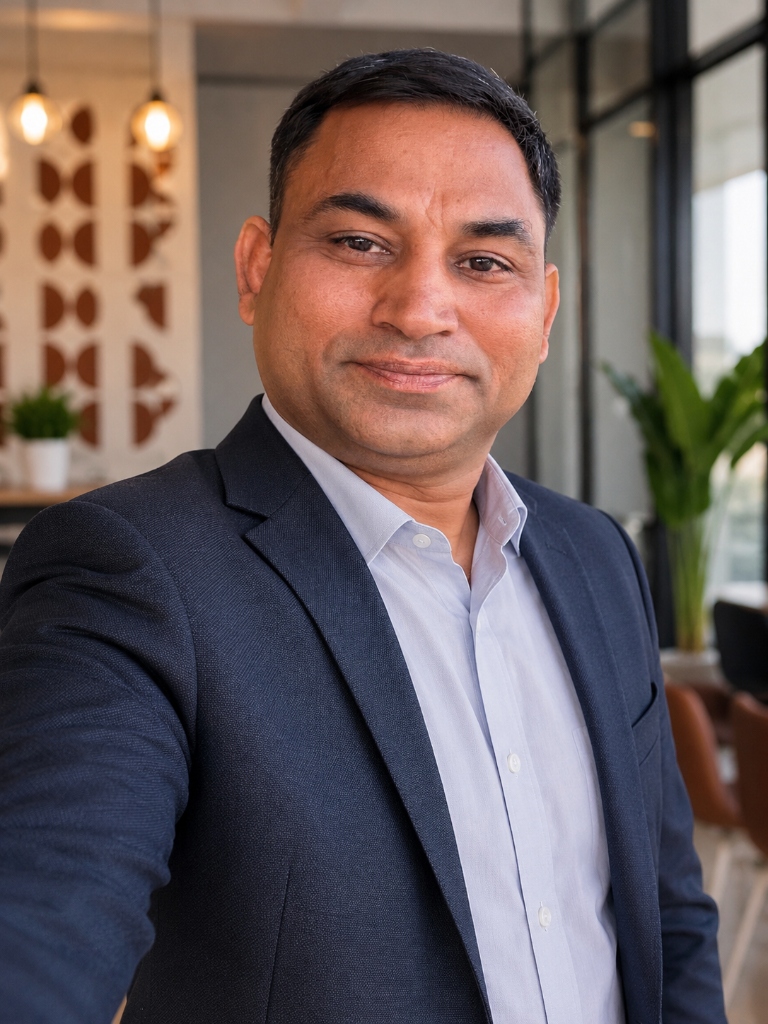
Dr. Rohit Saini
AI Consultant & Technology Lead Mentor (B.Tech, MBA). Mentoring school and college students in Python, Data Science, and modern AI architectures.